Lifesaving Society Swim Levels PDF: A Comprehensive Guide (Updated 12/09/2025)
Today‚ December 9th‚ 2025‚ access the Lifesaving Society’s comprehensive Swim Levels PDF‚ detailing programs like Swim Kids and Swim for Life‚ alongside conversion charts from the Red Cross!
The Lifesaving Society offers a progressive series of swim programs designed to build essential water skills and promote lifelong safety. These programs‚ detailed within the Lifesaving Society Swim Levels PDF‚ cater to individuals of all ages and abilities‚ starting with foundational preschool lessons and extending to advanced lifeguard training;
The core of the program lies in its structured levels – Swim Kids for younger children (ages 3-5) and Swim for Life for older children and adults. Each level builds upon the previous one‚ ensuring a gradual and confident skill progression. The PDF resource provides a clear overview of each level’s objectives‚ skills taught‚ and prerequisites.
Understanding the Lifesaving Society’s approach is crucial‚ especially when transitioning from other programs like the Red Cross‚ for which conversion charts are readily available. These programs aren’t just about learning to swim; they’re about fostering a deep respect for water safety and equipping individuals with the knowledge and skills to enjoy aquatic activities responsibly.
The Importance of Swim Levels and Skill Progression
The Lifesaving Society Swim Levels PDF emphasizes a structured skill progression‚ vital for building confidence and competence in the water. Each level isn’t simply a measure of swimming ability; it represents a milestone in developing crucial water safety skills. Progressing through these levels systematically minimizes risk and maximizes enjoyment.
Starting at beginner levels like Otter or Swim for Life 1‚ individuals learn fundamental skills – buoyancy‚ breath control‚ and basic movement. As they advance‚ the focus shifts to stroke technique‚ endurance‚ and eventually‚ rescue skills. This gradual approach‚ outlined in the PDF‚ ensures learners aren’t overwhelmed and build a solid foundation.
Proper level placement‚ aided by conversion charts for programs like the Red Cross‚ is paramount. Skipping levels can create gaps in knowledge and potentially compromise safety. The Lifesaving Society prioritizes a safe and effective learning journey‚ detailed within the comprehensive PDF resource.
Preschool Swim Levels (Ages 3-5)
The Lifesaving Society Swim Levels PDF details programs for ages 3-5‚ including Swim Kids Level 1 (Otter) and Level 2 (Swimmer 1)‚ fostering early water confidence!
Swim Kids Level 1: Otter
Swim Kids Level 1‚ known as Otter‚ represents the foundational stage within the Lifesaving Society Swim Levels PDF for preschool children aged 3-5. This introductory level focuses on water acclimation and building fundamental comfort. The PDF outlines that participants learn to enter the water safely‚ blowing bubbles‚ and submerge their faces briefly.
Key skills emphasized include floating with assistance‚ kicking with a kickboard‚ and developing basic water awareness. The program prioritizes a playful and encouraging environment‚ fostering a positive first experience with swimming. Parents are often actively involved‚ supporting their child’s progress and building confidence. The Lifesaving Society’s PDF resource details specific benchmarks and skills assessed at this level‚ ensuring consistent standards across programs. Successful completion of Otter prepares children for the next stage‚ Swim Kids Level 2: Swimmer 1‚ building upon these essential skills.
Swim Kids Level 2: Swimmer 1
Swim Kids Level 2‚ designated as Swimmer 1‚ builds directly upon the skills established in the Otter level‚ as detailed in the Lifesaving Society Swim Levels PDF. This stage‚ also for children aged 3-5‚ concentrates on independent water movement and developing basic swimming strokes. The PDF highlights that children will learn to float independently‚ both on their front and back‚ and begin to propel themselves through the water using combined arm and leg actions.
Key objectives include mastering bubble blowing‚ rhythmic breathing‚ and performing “starfish” floats. Swimmer 1 introduces rudimentary front crawl and backstroke techniques‚ focusing on body position and coordination. The Lifesaving Society’s PDF provides instructors with specific drills and progressions to ensure skill mastery. Successful completion of this level signifies a significant step towards independent swimming and prepares children for the more advanced skills introduced in subsequent Swim Kids levels.
Key Skills Developed in Preschool Levels
The Lifesaving Society Swim Levels PDF emphasizes that preschool levels (Otter and Swimmer 1) prioritize water acclimation and foundational skills. These programs‚ designed for children aged 3-5‚ focus on building comfort and confidence in the water‚ rather than perfecting swimming technique. Core skills detailed in the PDF include learning to enter and exit the water safely‚ blowing bubbles‚ and submerging the face.
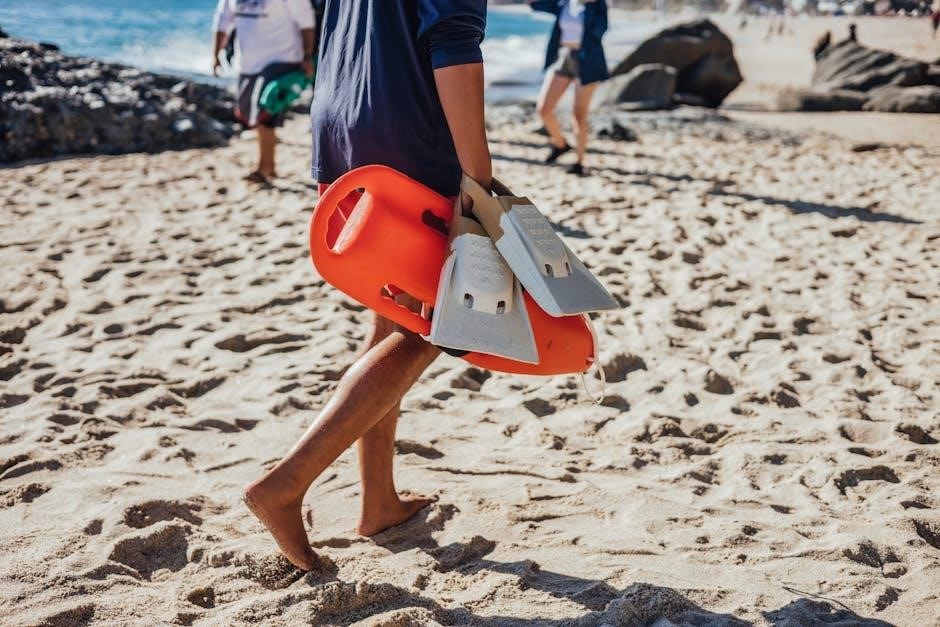
Children develop essential water safety skills like floating‚ reaching for the side‚ and understanding basic water rules. The PDF outlines progressions for independent movement‚ including kicking and arm actions‚ laying the groundwork for future stroke development. Importantly‚ these levels also incorporate “Water Smart” education‚ teaching children about safe aquatic environments and responsible behavior around water. These early experiences‚ as outlined in the Lifesaving Society resources‚ are crucial for fostering a lifelong positive relationship with swimming.
Parent & Tot Programs: A Foundation for Water Safety
The Lifesaving Society Swim Levels PDF highlights Parent & Tot programs as the earliest introduction to water safety for children‚ typically starting from 6 months old. These programs‚ detailed within the PDF resources‚ aren’t about teaching babies to swim independently; instead‚ they focus on parental involvement in fostering water comfort and building a positive association with the aquatic environment.

Key components‚ as outlined in the PDF‚ include parents learning safe handling techniques and how to support their child in the water. Activities emphasize rhythmic movements‚ songs‚ and games to encourage kicking‚ splashing‚ and gentle submersions. The Lifesaving Society stresses that these programs build trust and bonding while introducing essential water safety concepts. The PDF clearly states that Parent & Tot classes lay a vital foundation for future swimming lessons‚ preparing both parent and child for more advanced skill development and promoting lifelong water safety awareness.

Swimmer Levels (Beginner to Advanced)
The Lifesaving Society Swim Levels PDF details the Swim for Life program‚ ranging from 1 to 10‚ progressively building skills and confidence in the water!
Swim for Life 1‚ as outlined in the Lifesaving Society Swim Levels PDF‚ serves as the crucial entry point into the Swim for Life program. This foundational level focuses on developing essential water safety skills and building comfort in the aquatic environment. Participants learn basic entries and exits‚ surface support techniques‚ and fundamental movement skills within the water.
The PDF emphasizes the importance of establishing a positive relationship with the water‚ reducing fear‚ and fostering a sense of independence. Key skills include blowing bubbles‚ floating‚ and kicking with assistance. Furthermore‚ Swim for Life 1 introduces basic water smart education‚ teaching children about safe aquatic practices. This level is designed for beginners‚ aiming to create a solid base for future skill progression‚ preparing them for more advanced levels within the program. It’s a stepping stone towards confident and capable swimming!
Swim for Life 2: Building Endurance and Technique
The Lifesaving Society Swim Levels PDF details Swim for Life 2 as a progressive step‚ building upon the foundational skills established in Level 1. This level concentrates on enhancing swimming endurance and refining basic techniques. Swimmers begin to develop independent front and back strokes‚ focusing on proper body position and efficient arm and leg movements.
The PDF highlights the introduction of rhythmic breathing techniques‚ crucial for sustained swimming. Participants practice gliding and kicking for longer distances‚ increasing their comfort and confidence in the water. Emphasis is placed on entries and exits performed independently‚ alongside continued reinforcement of water safety principles. Swim for Life 2 aims to transition swimmers from assisted to unassisted swimming‚ preparing them for more complex stroke mechanics and advanced water skills. It’s about building stamina and technique!
Swim for Life 3: Refining Stroke Mechanics
According to the Lifesaving Society Swim Levels PDF‚ Swim for Life 3 focuses intensely on refining stroke mechanics for both front crawl and backstroke. Swimmers delve deeper into understanding body position‚ arm pull-throughs‚ and efficient kicking techniques. The PDF emphasizes identifying and correcting common errors to maximize propulsion and minimize drag.
This level introduces basic dive progression and surface support skills‚ building towards more advanced water maneuvers. Participants practice swimming continuously for extended periods‚ improving their endurance and stamina. Water smart education continues‚ reinforcing safe swimming practices and awareness of potential hazards. Entries and exits are practiced with increasing speed and efficiency. Swim for Life 3 is a pivotal stage‚ solidifying fundamental skills and preparing swimmers for the challenges of higher levels‚ ultimately aiming for confident and efficient swimming.
Swim for Life 4: Developing Water Confidence
The Lifesaving Society Swim Levels PDF details that Swim for Life 4 prioritizes developing unwavering water confidence alongside continued skill refinement. Swimmers build upon previously learned strokes‚ focusing on consistency and power. This level introduces breaststroke fundamentals‚ emphasizing proper technique and timing. The PDF highlights the importance of surface support and treading water for extended durations.
A key component is mastering efficient entries and exits‚ alongside practicing movement and swimming skills in varied conditions. Fitness is enhanced through interval training and challenging drills. Water smart education expands to include recognizing and responding to distressed swimmers. Participants learn basic underwater swimming skills‚ fostering comfort and control. Swim for Life 4 aims to create strong‚ capable swimmers who are comfortable and confident in any aquatic environment‚ preparing them for more advanced training.
Swim for Life 5: Advanced Swimming Skills
According to the Lifesaving Society Swim Levels PDF‚ Swim for Life 5 represents a significant leap in aquatic proficiency. Swimmers refine all four competitive strokes – freestyle‚ backstroke‚ breaststroke‚ and butterfly – focusing on efficiency and speed. The PDF emphasizes advanced fitness training‚ incorporating interval sets and distance swims to build endurance. Participants master complex diving techniques and underwater swimming skills‚ increasing both distance and control.
This level delves deeper into water smart education‚ covering topics like hypothermia and cold-water shock. Swimmers practice rescue skills‚ including approaches and carries‚ preparing them for potential emergency situations. The PDF details the importance of entries‚ exits‚ surface support‚ and movement skills. Swim for Life 5 aims to produce highly skilled and confident swimmers capable of tackling challenging aquatic environments and assisting others in need.
The Lifesaving Society Swim Levels PDF details Swim for Life 6 as a pivotal transition‚ introducing fundamental lifeguarding principles. While not a full lifeguarding course‚ this level builds a foundation for future certification. Swimmers learn to identify common aquatic hazards and understand the responsibilities of a lifeguard. The PDF highlights the importance of preventative lifeguarding‚ focusing on scanning techniques and proactive intervention.
Participants practice basic rescue equipment usage‚ including rescue tubes and reaching assists. They’re introduced to the principles of spinal injury management in the water and learn how to effectively communicate with distressed swimmers. Swim for Life 6 emphasizes teamwork and the importance of following established emergency action plans. This level prepares swimmers for the more rigorous training required for full lifeguard certification‚ as outlined in the PDF.
Swim for Life 7: Preparing for Advanced Rescue Training
According to the Lifesaving Society Swim Levels PDF‚ Swim for Life 7 serves as a crucial stepping stone towards advanced rescue training and potential lifeguard certification. This level significantly enhances rescue skills‚ building upon the foundation established in previous stages. Swimmers refine their techniques for approaching and rescuing distressed individuals‚ incorporating more complex scenarios.
The PDF details increased emphasis on efficient swimming with rescue equipment‚ including rescue tubes and manikins. Participants practice towing techniques and learn to effectively manage multiple victims. Swim for Life 7 introduces basic search patterns and the principles of underwater swimming for rescue purposes. A strong focus is placed on physical fitness and endurance‚ preparing swimmers for the demands of advanced training. This level‚ as detailed in the PDF‚ is designed to build confidence and competence in challenging aquatic environments.
Swim for Life 8: Advanced Water Rescue Techniques
The Lifesaving Society Swim Levels PDF outlines Swim for Life 8 as a demanding level focused on mastering advanced water rescue techniques. Building on Swim for Life 7‚ this stage introduces complex rescue scenarios and specialized equipment usage. Swimmers refine their skills in open water conditions‚ practicing rescues involving boats and varying currents.
According to the PDF‚ participants learn advanced towing methods‚ spinal immobilization techniques‚ and strategies for rescuing submerged victims. Emphasis is placed on team-based rescues and effective communication during emergency situations. Swim for Life 8 incorporates realistic simulations‚ challenging swimmers to apply their knowledge under pressure. The PDF highlights the importance of physical conditioning and mental preparedness for successful rescues. This level prepares candidates for advanced lifesaving certifications‚ demanding a high level of skill and dedication‚ as detailed within the official documentation.
Swim for Life 9: Preparing for Lifeguard Certification
The Lifesaving Society Swim Levels PDF details Swim for Life 9 as the crucial preparatory stage for lifeguard certification. This level intensifies training‚ focusing on the responsibilities and skills required of professional lifeguards. Swimmers refine rescue techniques‚ learn advanced first aid and CPR protocols‚ and develop preventative lifeguarding strategies.
The PDF emphasizes the importance of recognizing and responding to various aquatic emergencies‚ including spinal injuries and medical conditions. Participants practice surveillance skills‚ victim assessment‚ and effective communication with emergency services. Swim for Life 9 includes scenario-based training‚ simulating real-life lifeguarding situations. Physical fitness is rigorously assessed‚ ensuring candidates meet the demanding requirements of the profession. Successful completion of this level‚ as outlined in the PDF‚ is a prerequisite for enrolling in a formal lifeguard certification course‚ bridging the gap between skill development and professional readiness.
Swim for Life 10: Ranger ― Advanced Lifesaving Skills
According to the Lifesaving Society Swim Levels PDF‚ Swim for Life 10: Ranger represents the pinnacle of swimming and lifesaving skill development. This advanced level builds upon previous training‚ focusing on complex rescue scenarios and leadership abilities. The PDF highlights the Ranger program as preparing individuals for advanced rescue team roles and supervisory positions.
Ranger candidates refine their water rescue techniques‚ mastering advanced search patterns and utilizing specialized equipment. They learn to assess and manage complex aquatic emergencies‚ including multiple victim situations and hazardous environments. The PDF details training in team coordination‚ incident command‚ and effective communication. Physical conditioning is paramount‚ demanding exceptional endurance and strength. Completion of Swim for Life 10‚ as detailed in the PDF‚ demonstrates a mastery of lifesaving skills and a commitment to water safety‚ often leading to opportunities in competitive lifesaving sports or advanced rescue certifications;
Conversion Charts: Red Cross to Lifesaving Society
The Lifesaving Society Swim Levels PDF includes detailed conversion charts‚ assisting families in understanding equivalencies between Red Cross and Lifesaving Society programs for seamless registration!
Understanding the Equivalency Between Programs
Navigating swim program transitions can be complex‚ but the Lifesaving Society Swim Levels PDF simplifies the process by clearly outlining the equivalencies between the Lifesaving Society and the Red Cross programs. This detailed comparison ensures children are placed in the appropriate skill level‚ regardless of their prior swimming experience.
The chart specifically addresses age groups‚ from infants to older children‚ mapping Red Cross levels like Starfish to corresponding Lifesaving Society programs such as Parent & Tot or Swim Kids Level 1 (Otter). For older swimmers‚ the PDF details how Red Cross levels align with Swim for Life 1 through 10‚ including the advanced Ranger program.
Understanding these equivalencies prevents skill gaps and ensures a smooth progression through the Lifesaving Society’s comprehensive curriculum. The PDF also notes potential pathways into competitive swimming (ICS) for those demonstrating advanced abilities‚ offering a clear roadmap for continued development.
Age-Based Registration Guidance
The Lifesaving Society Swim Levels PDF provides crucial age-based guidance for seamless registration into the appropriate swim program. It explicitly states that children under three years old require a parent’s accompaniment‚ typically enrolling in Parent & Tot programs – a foundational step for water safety and comfort.
For preschool-aged children (3-5 years)‚ the PDF details the progression from Swim Kids Level 1 (Otter) to Swim Kids Level 2 (Swimmer 1)‚ emphasizing skill development at each stage. As children mature‚ the registration chart assists in transitioning to the Swim for Life program‚ starting with Swim for Life 1.

The PDF stresses the importance of utilizing the provided chart to accurately assess a child’s abilities and select the most suitable level‚ ensuring a positive and effective learning experience. It also highlights that individual skill assessments may be conducted to confirm appropriate placement.
Swim Program Conversion Chart Details
The Lifesaving Society Swim Levels PDF features a detailed conversion chart designed to bridge the gap for swimmers transitioning from the Red Cross program. This chart meticulously outlines equivalencies‚ allowing for accurate placement within the Lifesaving Society’s framework.
For example‚ the chart indicates that a swimmer previously in the Red Cross Level 1 may directly enroll in Swim for Life 1 with the Lifesaving Society. Older children‚ previously involved in the Red Cross’s Intro to Competitive Swim (ICS)‚ might find a suitable match in Swim for Life 10 (Ranger).
The PDF clarifies that these are guidelines‚ and individual skill assessments are recommended. The chart covers age groups from 0-2 years (Starfish equivalent) through advanced levels‚ providing a comprehensive resource for parents and instructors to ensure a smooth and appropriate transition between programs.
National Drowning Prevention Week & Water Safety
The Lifesaving Society emphasizes crucial water safety during National Drowning Prevention Week: always swim with a buddy and consistently utilize properly fitted life jackets!
The Lifesaving Society’s Role in Drowning Prevention
The Lifesaving Society plays a pivotal role in diminishing drowning incidents across Canada through comprehensive education and training programs. Central to this mission are the meticulously designed Swim for Life programs‚ detailed within the Lifesaving Society Swim Levels PDF. These programs aren’t merely about teaching swimming; they cultivate essential water safety skills‚ fostering confidence and responsible behavior around water.
By offering progressive swim levels – from preschool Swim Kids to advanced Swim for Life – the Society ensures individuals develop a robust skillset‚ encompassing fundamental strokes‚ water survival techniques‚ and even introductory lifeguarding concepts. The PDF resource serves as a vital guide for parents and instructors‚ outlining specific competencies for each level‚ facilitating appropriate placement and skill progression.
Furthermore‚ the Society actively promotes awareness during National Drowning Prevention Week‚ emphasizing the importance of buddy systems and life jacket usage‚ reinforcing the message that proactive safety measures are paramount. Their dedication extends beyond instruction‚ encompassing advocacy for safer aquatic environments and ongoing research into drowning prevention strategies.
Importance of Swimming with a Buddy
The Lifesaving Society consistently emphasizes the critical importance of the buddy system‚ a cornerstone of water safety detailed within the Lifesaving Society Swim Levels PDF. Swimming alone significantly increases risk; a buddy provides immediate assistance in emergencies‚ acting as a vital link to safety. This principle is woven throughout the Swim for Life programs‚ reinforcing responsible aquatic behavior from beginner levels to advanced training.
The PDF resource highlights that a buddy isn’t simply someone present‚ but an active participant in safety. Buddies should maintain visual contact‚ communicate effectively‚ and be aware of each other’s swimming abilities. This collaborative approach is particularly crucial for individuals progressing through the swim levels‚ as they gain confidence and explore new skills.
Officials actively promote this message during National Drowning Prevention Week‚ underscoring that even strong swimmers can benefit from a buddy. The buddy system isn’t a replacement for proper supervision or life jackets‚ but a crucial layer of protection‚ enhancing overall water safety for everyone.
Life Jacket Usage and Best Practices
The Lifesaving Society Swim Levels PDF dedicates significant attention to proper life jacket usage‚ recognizing it as a vital component of drowning prevention. Officials strongly recommend wearing a life jacket‚ especially for weak swimmers‚ during boating activities‚ or when near open water. The PDF details that a correctly fitted life jacket keeps the head above water and assists in maintaining a safe body position.
Best practices outlined include ensuring the life jacket is Coast Guard approved‚ appropriately sized for the wearer’s weight and chest size‚ and securely fastened. Regular inspection for damage is also crucial. The Swim for Life programs integrate life jacket familiarization‚ teaching participants how to properly don and adjust them.
The Lifesaving Society emphasizes that life jackets are not a substitute for supervision‚ but a crucial safety device. During National Drowning Prevention Week‚ they actively promote life jacket use‚ highlighting its life-saving potential for all swim levels and aquatic activities.
Accessing Lifesaving Society Swim Levels PDF Resources
Find official Lifesaving Society Swim Levels PDF documents online‚ detailing programs and conversion charts; understand the content for appropriate swim level registration guidance!
Where to Find Official PDF Documents
Locating the official Lifesaving Society Swim Levels PDF resources requires a focused search. Typically‚ these documents are directly available on the Lifesaving Society’s official website. Navigate to the swimming or aquatics section‚ where downloadable PDFs outlining program details‚ skill requirements‚ and conversion charts are usually hosted.
Additionally‚ many local Lifesaving Society branches or affiliated organizations‚ such as the YMCA or community recreation centers offering these programs‚ will also provide direct links to the relevant PDF documents on their own websites. A simple online search using keywords like “Lifesaving Society Swim Levels PDF” or “Swim for Life PDF” will often yield results pointing to these official sources.
Ensure you are downloading from a trusted source to guarantee the accuracy and currency of the information‚ as program details can be updated periodically. Always check for the latest revision date‚ as indicated in the provided information – Updated 12/09/2025 – to ensure you have the most current version.
Understanding the Content of the PDF
The Lifesaving Society Swim Levels PDF is a detailed guide encompassing various programs‚ from Preschool levels like Otter and Swimmer 1‚ to advanced Swim for Life stages reaching Ranger (Level 10). Expect comprehensive outlines of skills taught at each level‚ including entries‚ exits‚ surface support‚ movement‚ and swimming techniques.
Crucially‚ the PDF includes conversion charts facilitating transitions from programs like the Red Cross‚ providing age-based registration guidance. You’ll find information on water safety‚ emphasizing buddy systems and proper life jacket usage‚ aligning with National Drowning Prevention Week initiatives.
The document details fitness components and water smart education integrated into each level. It clarifies program structures‚ like Parent & Tot programs‚ and outlines progression towards advanced rescue training and even lifeguard certification. Understanding this content ensures appropriate level placement for participants.